
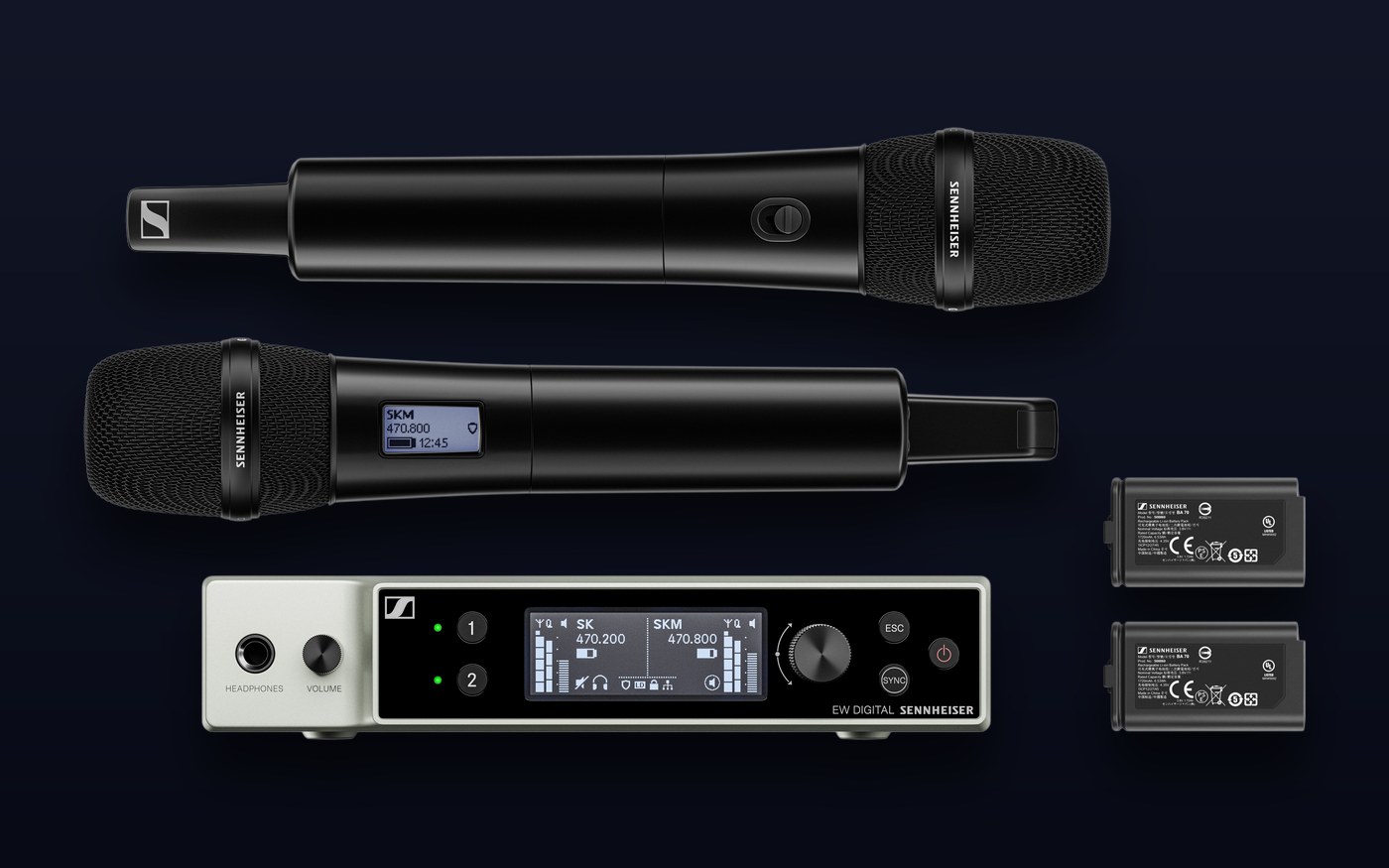
EW-DX is Sennheiser’s digital wireless platform for installed and touring systems. Up to 88 MHz of switching bandwidth, an equidistant channel grid set by AutoScan, 1.9 ms latency and up to 12 hours on a charge — built for the venues where the RF is already crowded before you arrive.
Why the wide switching bandwidth matters
EW-DX offers up to 88 MHz of switching bandwidth. That is the range across which the system can find clear space, and the wider it is, the more likely a large multi-channel deployment finds room in a congested band. AutoScan then lays out an equidistant channel grid, which keeps intermodulation predictable rather than something you discover during soundcheck.
RF reception uses Intelligent Switching Diversity, and the link carries uncompressed-quality audio through Sennheiser’s SePac codec at 1.9 ms latency, with AES-256 encryption as standard.
Receivers
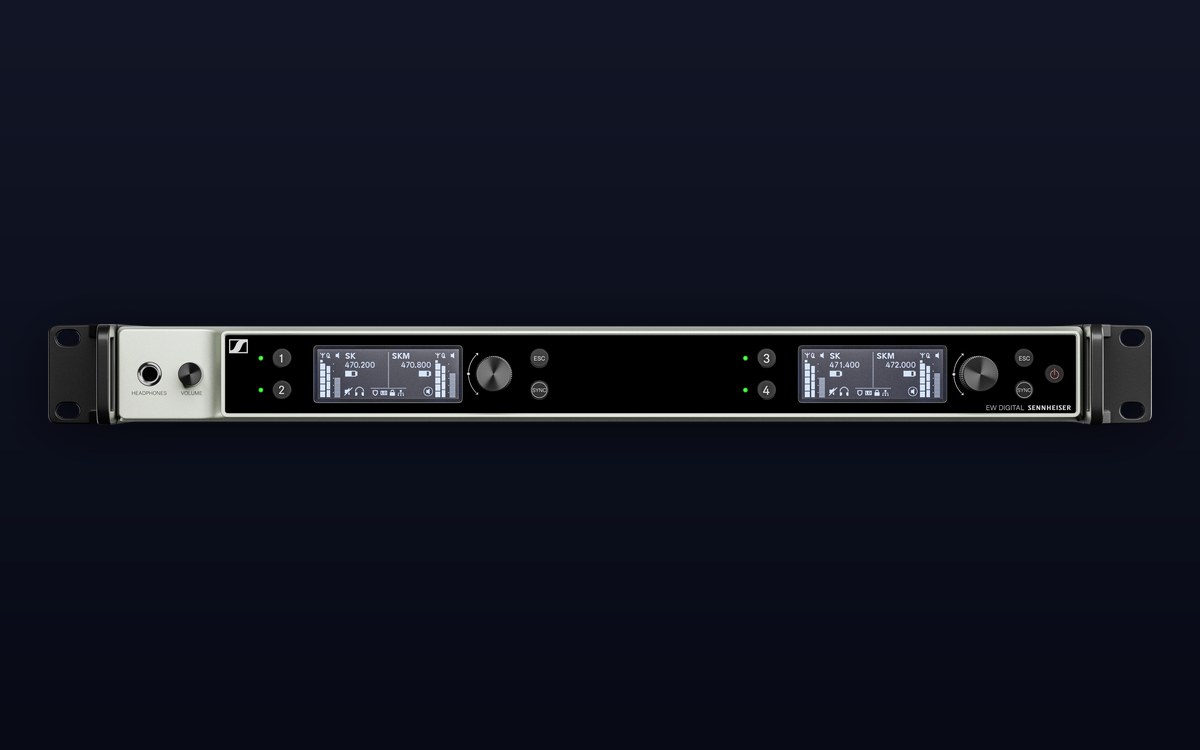
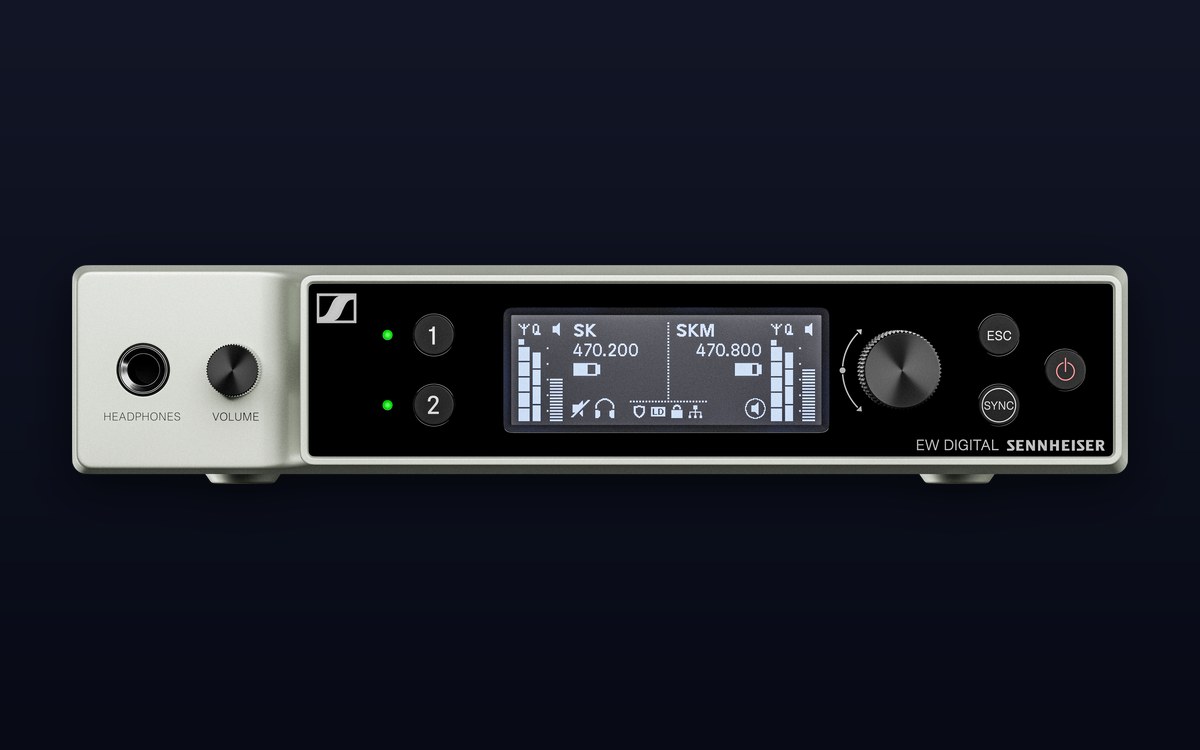
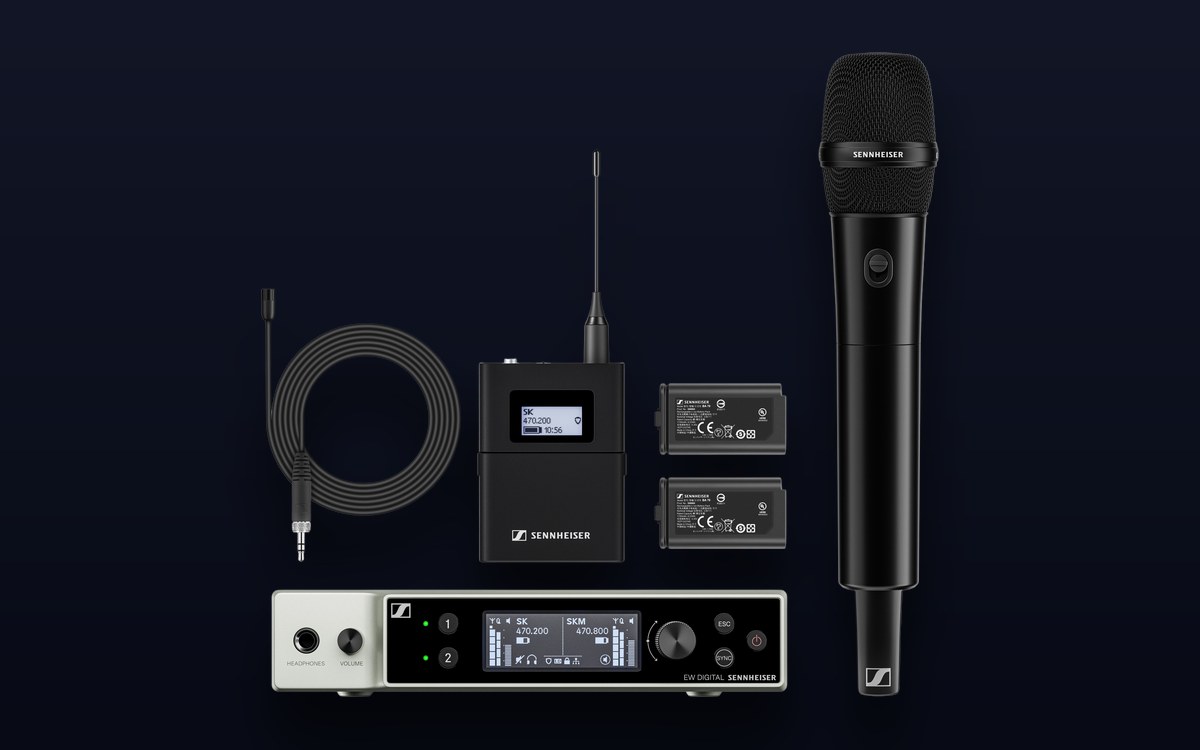
- EW-DX EM 2 — two channels, half rack.
- EW-DX EM 2 Dante — two channels with Dante network audio.
- EW-DX EM 4 Dante — four channels in 1U with Dante, for higher channel counts in broadcast, theatre and installation.
Transmitters
Bodypacks come as the EW-DX SK and the 3-pin EW-DX SK 3-pin; handhelds as the EW-DX SKM with capsule and the EW-DX SKM-S with a mute switch and no capsule, so the head can be chosen for the job.
Both carry an e-ink display that stays readable with the transmitter switched off, run up to 12 hours on the BA 70 rechargeable pack, and support in-device charging — packs do not have to be opened between shows.
Sets, or components
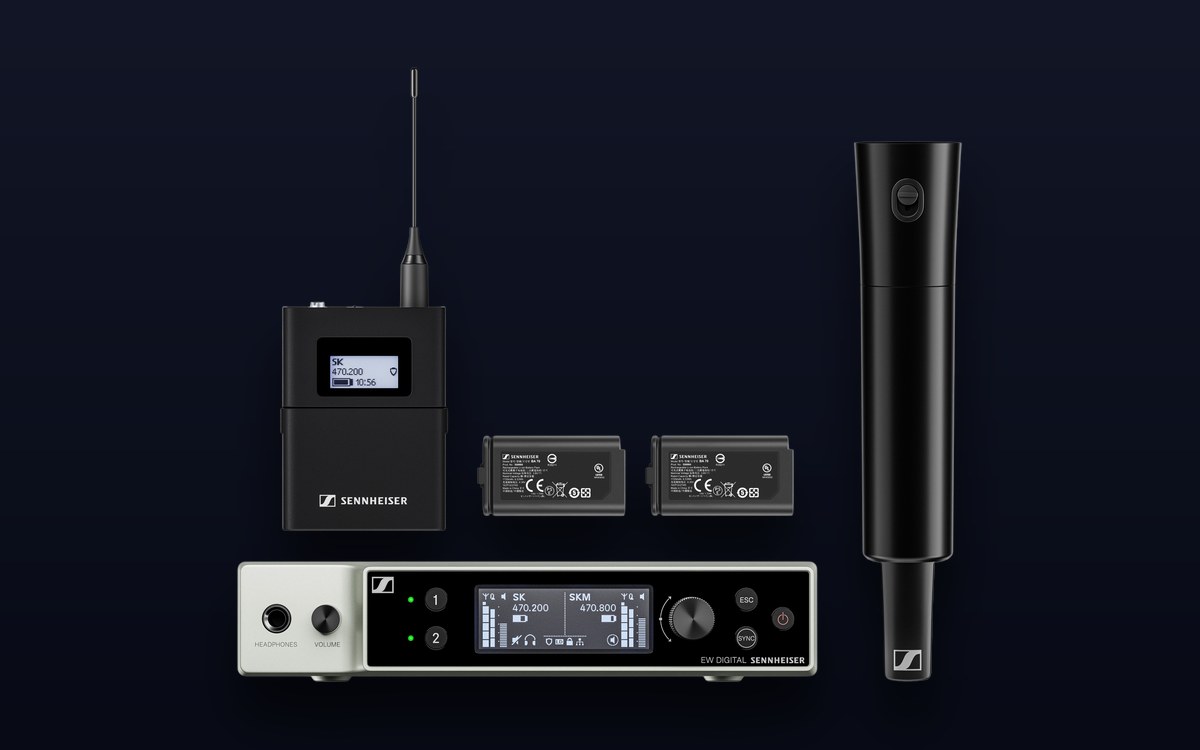
Where the microphone is already decided, the sets are the shortest route: the EW-DX 835-S Set pairs a handheld with the MMD 835 cardioid dynamic capsule, the EW-DX MKE 2 Set pairs a bodypack with the MKE 2 omnidirectional lavalier, and the MKE 2 / 835-S Set covers both from one receiver.
Where it is not, the SK / SKM-S Base Set supplies receiver, bodypack and handheld body and leaves the capsule and lavalier to be specified against the room.
Conference and council rooms
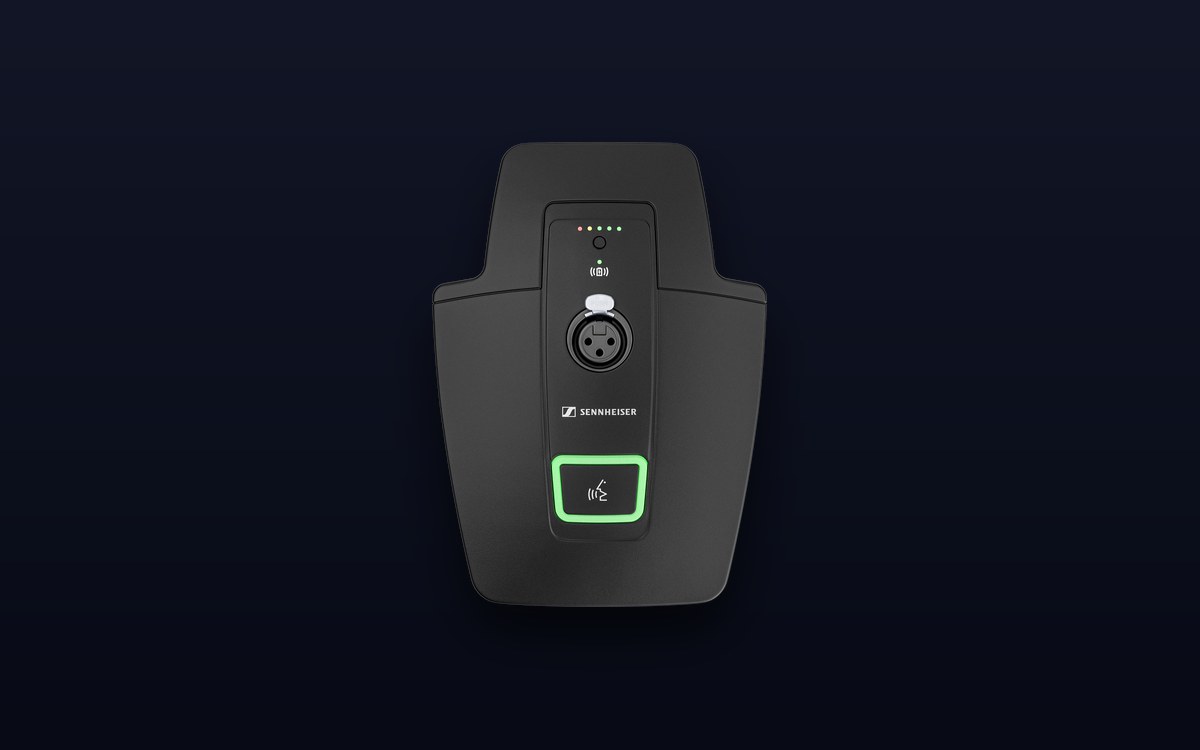
The EW-DX TS wireless table stands take a gooseneck microphone in 3-pin or 5-pin form, the 5-pin version carrying the extra pins used for an illuminated ring or status indication. They remove the cable run to every seat, which is usually the expensive part of a council chamber or boardroom.
Infrastructure
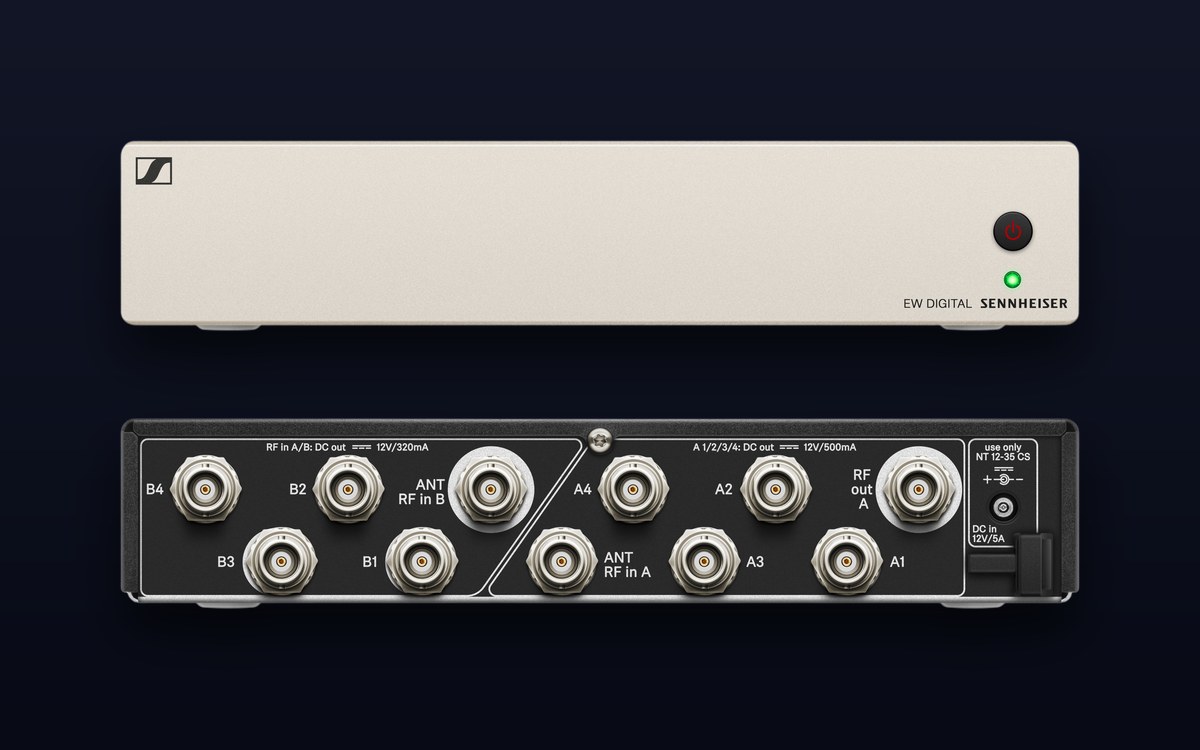
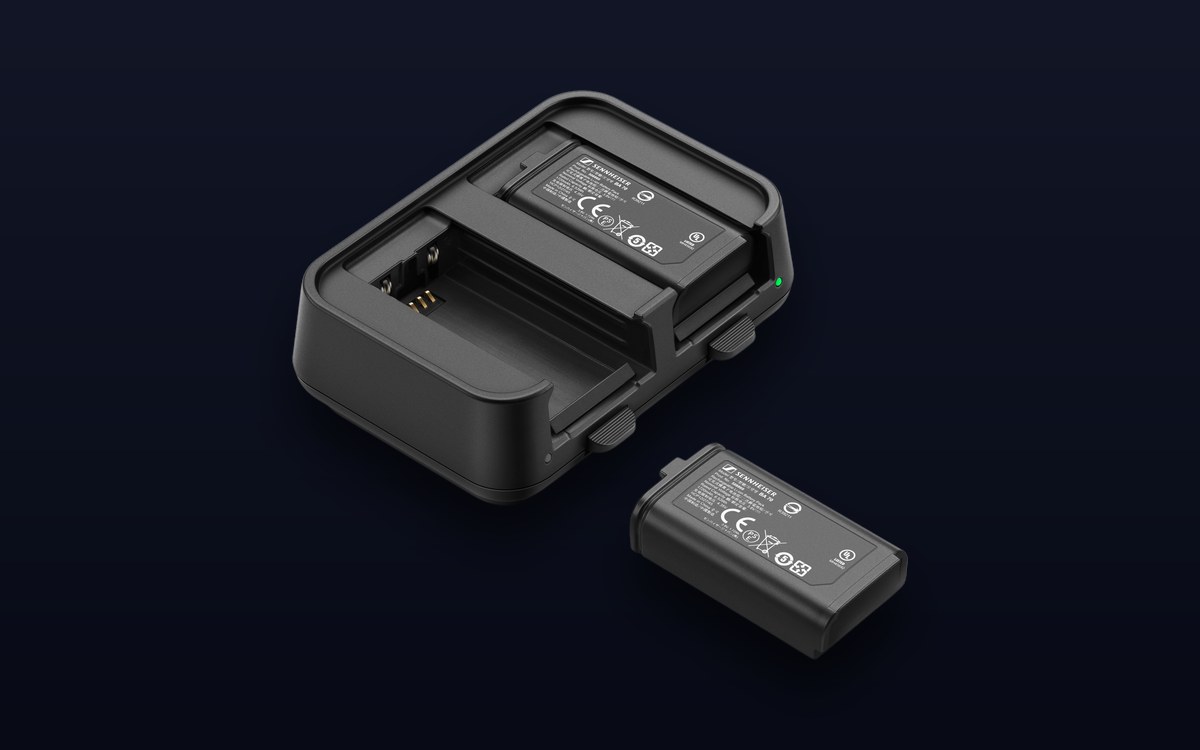
A rack of receivers should share one well-placed antenna position rather than each carrying its own whips — that is what the EW-D ASA active antenna splitter is for. Charging is handled by the EW-D Charging Set and the CHG 70N, keeping BA 70 packs turned around between sessions.
Frequency ranges
EW-DX is available across UHF and the 1.8 GHz band, including Q1-9 (470.2–550 MHz), S1-10 / S2-10 / S4-10 (606.2–693.8 MHz), U1/5 (823.2–864.8 MHz), V3-4 and V5-7 in the 900 MHz range, and Y1-3 (1785.2–1799.8 MHz). Which range is legal and sensible depends on where the system will be used — that is worth settling before anything is ordered.
AMSYS carries the full EW-DX range. Talk to us about channel counts, frequency planning for your territory, antenna distribution and commissioning.